
You're flying. Not in a plane. Just… flying. Over a city you've never seen before, with buildings that look vaguely familiar but aren't quite right. The wind is on your face. Everything feels absolutely real.
Then you're in a school corridor. There's an exam in ten minutes and you haven't studied. You can't find the classroom. The hallways keep changing. Panic is building in your chest.
Then you wake up. Heart beating a little fast. Sheets tangled. And you lie there thinking… what on earth was that?
Everyone dreams. Every single night. Even the people who swear they don't. What most of us never stop to wonder is: why? What is actually going on in your brain during those strange, vivid, sometimes beautiful, sometimes terrifying hours of the night?
The answer turns out to be far more important than you might think.
The Stage Where Dreams Come Alive
Most dreaming happens during a specific phase of sleep called REM, which stands for Rapid Eye Movement. It's named that for an obvious reason: if you watch someone in REM sleep, their eyes are darting around beneath their closed eyelids, almost as if they're watching a movie.
In a way, they are.
During REM, your brain is extraordinarily active. In fact, some parts of it are more active than when you're fully awake. The visual cortex lights up, creating the vivid imagery. The emotional centres fire intensely, which is why dreams feel so charged. The prefrontal cortex, the rational, logical part of your brain, goes relatively quiet. That's the reason dreams don't follow the rules. People shapeshift. Gravity is optional. Your childhood home is somehow also your office. And none of it seems strange until you wake up.
Here's the fascinating part. While all of this is happening inside your head, your body is essentially paralysed. A mechanism called sleep atonia switches off voluntary muscle movement during REM so that you don't physically act out your dreams and end up hurting yourself. You could be sprinting through a jungle in your dream while your body lies perfectly still in bed.
Evolution thought of everything.
You cycle through REM multiple times each night, roughly every 90 minutes. But the REM phases get longer as the night goes on. Your most vivid, complex, emotionally rich dreams happen in the final hours of sleep. This is important, and we'll come back to it.
So Why Do We Dream?
This is one of the oldest questions in human history. Civilisations across the world have tried to answer it. The ancient Egyptians believed dreams were messages from the gods. Freud thought they were windows into repressed desires. Neuroscience has a more nuanced picture, and, it's even more interesting.
There isn't one single reason we dream. The brain appears to use dream time for several critical functions, all happening simultaneously.
Emotional housekeeping. During REM sleep, your brain replays the emotional experiences of the day, but with a twist. It processes them with the stress chemistry turned down. Think of it as revisiting difficult moments in a safe environment, stripping away the raw emotional charge while keeping the memory and the lesson. This is why a problem that felt overwhelming at midnight often feels manageable by morning. You didn't just "sleep on it." Your mind actively worked through it while you dreamed.
Memory sorting. Your brain receives an enormous amount of information every day. Far more than it needs to permanently store. During dreaming, it decides what to keep and what to discard. Important memories get consolidated and woven into your existing knowledge. Irrelevant details get cleared out. Students who get proper REM sleep after studying retain significantly more than those who don't. The learning that started at the desk was completed in the dream.
Creative connection. This one is remarkable. During REM, your brain makes connections between ideas that your waking mind would never attempt. It pulls from distant memories, unrelated time periods, completely separate domains of knowledge, and mashes them together in novel ways. That's why dreams are so bizarre. Your brain is experimenting. It's combining things that don't normally go together, looking for patterns and insights that logic alone can't find.
Threat rehearsal. Ever wonder why so many dreams involve stressful situations? Being chased. Falling. Showing up somewhere unprepared. One theory suggests that dreaming evolved partly as a rehearsal system. Your brain simulates threatening scenarios so that if something similar happens in waking life, you've already practised a response. It's a survival tool, built over millions of years, still running every night.
Dreams That Changed the World
If you think dreams are just random noise, consider this.
Paul McCartney heard the melody for "Yesterday" in a dream. He woke up, went to the piano, and played it before he could forget. He spent weeks asking people if they'd heard it before, convinced he must have borrowed it from somewhere. He hadn't. His dreaming brain composed one of the most famous songs in history.
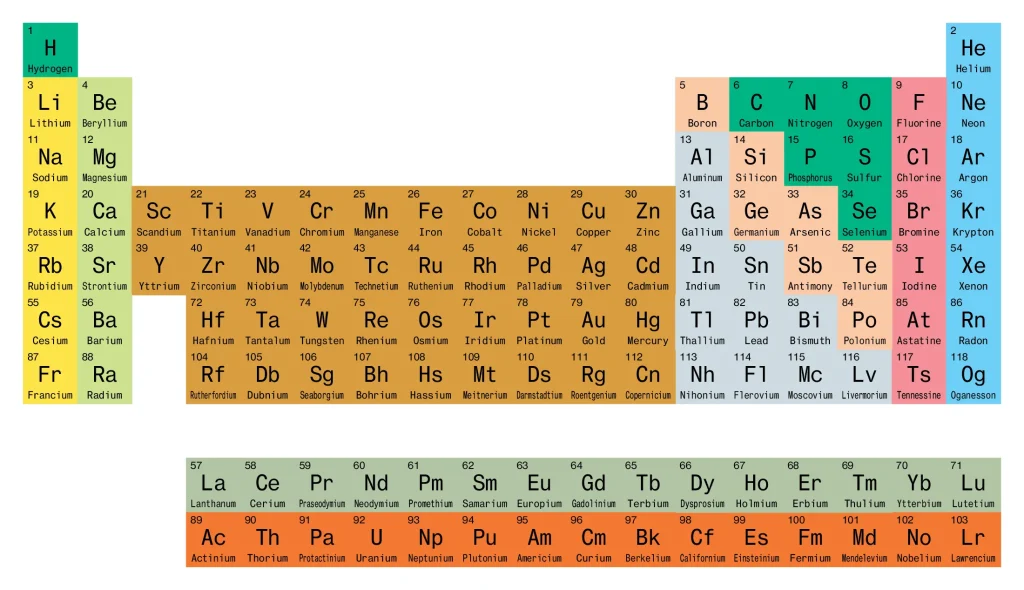
Dmitri Mendeleev, the chemist, had been struggling for years to organise the elements into a coherent system. One night, he dreamed of a table where all the elements fell into place. He jolted awake and wrote it down immediately. That dream became the periodic table.
Elias Howe, the inventor of the sewing machine, was stuck on a design problem: where to put the hole in the needle. He dreamed of being attacked by warriors carrying spears with holes near the tips. The answer had been handed to him. Put the hole at the point, not the top.
These "coincidences" are examples of what the dreaming brain does every night for all of us, perhaps on a smaller scale. It connects, recombines, and creates. Most of us don't remember. But work is happening.
What Kills Your Dreams
Here's where it gets practical. And a little uncomfortable.
Several extremely common habits directly suppress REM sleep, which means they suppress your ability to dream, process emotions, consolidate memories, and think creatively.

Alcohol. This is the big one. Even small amounts of alcohol devastate REM sleep. You might fall asleep faster after a few drinks, but your brain spends the night trapped in lighter sleep stages, barely touching REM. That "foggy" feeling the morning after is a brain that never got to do its overnight processing. You skipped the most important part of the night.
Screens before bed. Blue light from phones and laptops delays the onset of melatonin, which pushes your entire sleep cycle later. Since REM phases are longest in the final hours of sleep, and most people wake to an alarm at a fixed time, the hours that get cut are exactly the hours richest in dreaming. You may be shaving off the richest dreaming hours without even realising it.
Alarm clocks. Speaking of alarms. That jarring sound that rips you out of sleep each morning? There's a good chance it's pulling you out of a REM phase. Your brain was mid-process, working through something, and the alarm just killed it.
Chronic stress. Elevated cortisol disrupts sleep architecture across the board, but REM is particularly vulnerable. People under chronic stress often report disturbing, fragmented dreams or no dream recall at all. The system that's supposed to help you process stress is itself being damaged by stress. A vicious cycle.
Protect Your Dreams, Transform Your Days
When people talk about getting better sleep, they usually mean falling asleep faster or not waking up at 3 AM. Those things matter. But the quality of your REM sleep, the richness and depth of your dreaming life, might matter just as much.
When you dream well, you wake up emotionally lighter. Problems that seemed impossible the night before suddenly have solutions. Your mood is steadier. Your memory is sharper. Your creative thinking is more fluid. You're rested and renewed.
And the beautiful thing is, you don't need to do anything special to get there. You just need to stop doing the things that prevent it. Protect your sleep. Give yourself enough hours. Keep the screens away in the evening. Let your body wake naturally when it can. Create the conditions, and your brain will do what it has done every night for millions of years.
Your dreams are your brain's most sophisticated tool for making sense of your life, healing from your day, and preparing you for tomorrow.
All you have to do is let them happen.
SleepWise Programs
Great sleep transforms every part of your life for the better. Your energy, your clarity, your mood, your health, your relationships. All of it upgrades when you sleep well.
If what you've read here resonates, and you're done guessing your way to better sleep, we built SleepWise to give you the complete path to the Ultimate Sleep Experience.
The 5-Day Sleep Reset lays the foundation. It resets your body's natural rhythms, quiets the mental chatter, and gets you sleeping properly again in under a week. Most people feel a shift within the first few days. Click to begin the 5-Days Sleep Reset.
For those ready to go all in, Sleep Mastery leaves nothing unaddressed. Your circadian rhythm, your nervous system, your gut, your stress, your bedroom, your midnight awakenings, even your snoring partner. Sleep Mastery is a comprehensive 12 week program with a plethora of bonuses.. A system so thorough that by the end, you will have learned to harness the awesome power of sleep to create the energy you require to transform your life. Click to Begin the Sleep Mastery Program (Sleep Mastery includes all content from the 5-Day Sleep Reset).
We will see you on the inside.